Saying Bye to The Pacifier!
If you’re reading this, chances are you’ve got a little one who’s pretty attached to their pacifier.
And yeah… I get it.
Because I’ve been there.
As a dad raising my son here in Korea, that pacifier was basically part of our survival kit. Right next to snacks, wipes, and whatever random toy we needed to avoid a meltdown in public.
Long car rides? Pacifier.
Late nights? Pacifier.
Random meltdown at a café? Definitely pacifier.
It worked like magic.
But then one day, you start thinking:
👉 “Okay… how long is this supposed to last?”
And more importantly…
👉 “How do I actually get rid of it… without turning my house upside down?”
Because let’s be honest—taking away something your child loves is never simple.
But here’s the good news:
👉 There is a way to do it smoothly.
Not perfectly. Not magically overnight.
But in a way that actually works.
Why You Should Stop Pacifier Use (Without Overthinking It)
Before we jump into the steps, let’s talk quickly about why this even matters.
Because if your child is happy and calm, it’s easy to think:
“Eh… I’ll deal with it later.”
I thought the same thing.
But over time, a few things start to come up.
First, there’s the health side.
Using a pacifier for too long can increase the chances of:
- Ear infections
- Germ exposure (because those things go everywhere)
- Dental issues as teeth start developing
- Speech delays, since kids talk less when something’s in their mouth
But honestly?
The biggest reason isn’t even medical.
👉 It’s the habit.
Your child starts to connect comfort with the pacifier.
Upset? Pacifier.
Tired? Pacifier.
Bored? Pacifier.
And at some point, you want them to learn:
👉 “I can feel okay without it.”
That’s the real goal.
Step 1: Start Talking About It Early
One of the biggest mistakes parents make?
👉 Taking the pacifier away out of nowhere.
That’s a guaranteed meltdown.
Instead, start planting the idea.
Keep it simple.
“Hey, you’re getting bigger now. Soon we won’t need the pacifier anymore.”
That’s it.
You don’t need a long explanation.
Just say it casually, once a day.
Now your child might:
- Say “No!”
- Get upset
- Ignore you completely
That’s all normal.
In fact…
👉 It’s a good sign.
It means they understand something is changing.
And that’s the first step.
Step 2: Limit When It’s Used
Now we start shifting the habit.
Instead of removing the pacifier completely, you control when it’s allowed.
For example:
- Only at bedtime
- Only during naps
- Not during playtime
This creates a simple rule your child can start to understand.
👉 “I don’t need this all the time.”
And that’s a huge shift mentally.
At first, they might ask for it during the day.
Stay calm.
Distract them.
Hold the boundary.
This step is all about consistency.
Step 3: Remove It When They Don’t Notice
This is one of the easiest and most effective tricks.
Whenever your child:
- Falls asleep
- Gets distracted
- Is busy playing
👉 Gently take the pacifier away.
Don’t say anything.
Don’t make it a moment.
Just remove it.
What happens over time is simple:
👉 They start spending longer and longer without it.
And they realize…
“I’m actually fine.”
Step 4: Keep It Out of Sight
Here’s something you’ll notice quickly.
If your child sees the pacifier…
👉 They want it.
So make it less visible.
Don’t leave it:
- On the couch
- On the table
- In their hand all day
Instead:
- Put it in a drawer
- Keep it in a bag
- Only bring it out when needed
Out of sight = fewer battles.
And fewer battles = easier transition.
Step 5: Replace the Comfort (This Is Where Parents Win or Lose)
This is the step that really matters.
Because you’re not just removing an object.
👉 You’re removing comfort.
So you have to replace it.
And no… not with toys or sugar.
With you.
When your child is upset:
- Sit with them
- Talk to them
- Hug them
- Stay calm
When my son got frustrated, I didn’t always have some perfect solution.
Sometimes we just:
- Read a book
- Walked outside
- Played something simple
And honestly?
That worked better than anything else.
Because what kids really want is connection.
Step 6: Practice Going Out Without It
This is where things get real.
Leaving the house without the pacifier can feel risky.
You start thinking:
“What if they cry? What if they melt down?”
But here’s the trick:
👉 Start small.
Go out for short periods:
- A walk around the block
- A quick trip to the park
- A short visit to a store
Living in Korea, I used playgrounds a lot for this.
Kids get distracted fast when there’s something to do.
And that’s the key.
👉 Keep them engaged.
As you build confidence, increase the time.
Soon, being outside without the pacifier becomes normal.
Step 7: Identify the Hard Moments
Every child has trigger times.
Moments when they want the pacifier the most.
Usually:
- Before sleep
- When tired
- When upset
Start paying attention.
Once you know the pattern, you can prepare for it.
For example, bedtime might need:
- A calm routine
- A story
- Quiet time
So the pacifier becomes less important.
Step 8: Encourage Progress (Without Bribing)
You don’t need to buy toys.
But you can encourage progress.
Try simple things like:
- Sticker charts
- Extra story time
- Letting them choose an activity
Say things like:
“Hey, you didn’t use your pacifier today. That’s awesome.”
That kind of recognition goes a long way.
Step 9: Create a “Goodbye Moment”
Now we’re at the final stage.
And this is where you can make a big difference.
Instead of just removing the pacifier…
👉 Turn it into an event.
Kids understand moments.
They remember experiences.
Some parents use:
- The pacifier fairy
- Balloon releases
- Giving it to another baby
And honestly, those are great.
But here’s what worked for me 👇
The Branch Trick (True Story)
So my son was really attached to his pacifier.
We needed a clean break.
So I made up a story.
I told him:
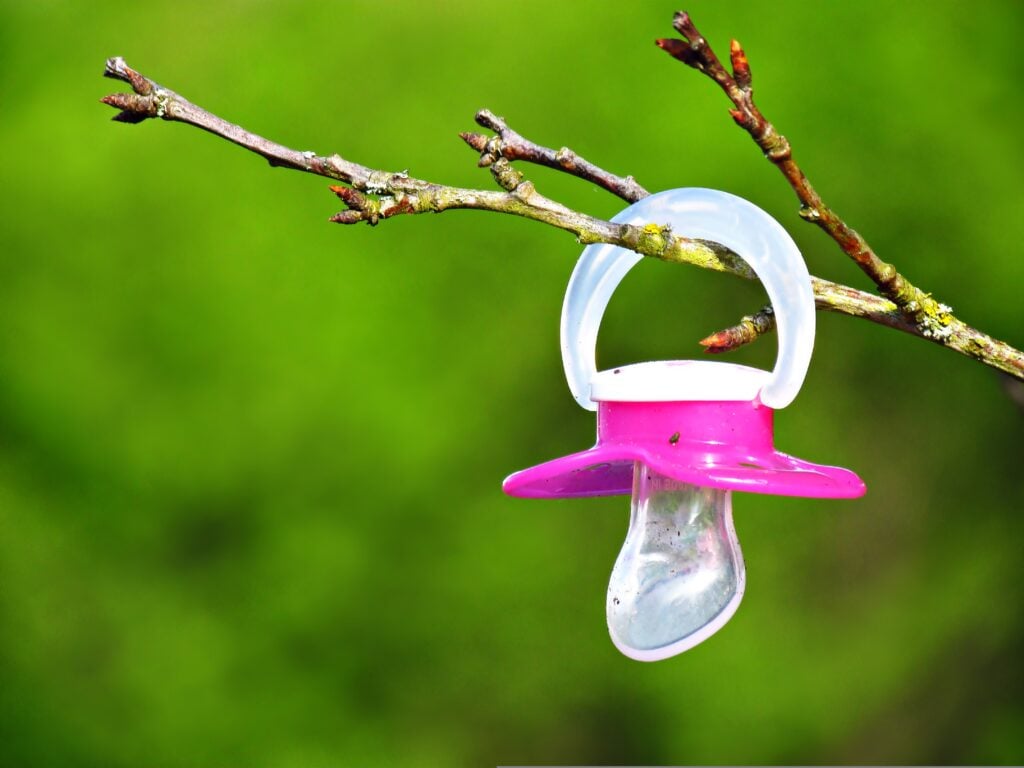
👉 A special branch would come and take his pacifier away forever.
Yeah… sounds random, I know 😄
But kids love imagination.
So I planned it with my wife.
I stepped outside with a small branch.
Knocked on the door.
My wife opened it slightly.
My son came over.
And I slowly pushed the branch through the door.
My wife whispered:
“Quick… hang your pacifier on the branch and say goodbye.”
And just like that…
👉 He did it.
No tears. No meltdown.
Just… done.
Pacifier gone.
Why That Worked So Well
It wasn’t about tricking him.
It was about:
- Making it feel special
- Giving him control
- Turning it into a moment
Kids respond to stories more than logic.
Step 10: No Going Back
This is the rule.
Once it’s gone…
👉 It’s gone.
No exceptions.
None of the “just tonight.”
No “only because you’re upset.”
Because if it comes back…
👉 You start all over again.
Stay strong.
It’s worth it.
What Happens Next
You might get:
- A couple of rough nights
- Some resistance
- A bit of frustration
That’s normal.
But it passes.
And usually faster than you expect.
Final Thoughts (From One Dad to Another)
Getting rid of the pacifier isn’t just about stopping a habit.
It’s about helping your child grow.
Learning to handle emotions without relying on something external.
And yeah…
It’s not always easy.
But it’s one of those parenting moments where you realize:
👉 “Okay… we’re moving forward.”
And now, with my son at 9 years old…
That pacifier phase?
Feels like a lifetime ago.