Low-Stim shows, and its meaning was just discovered by yours truly… I’ve never heard the term until a few weeks ago…
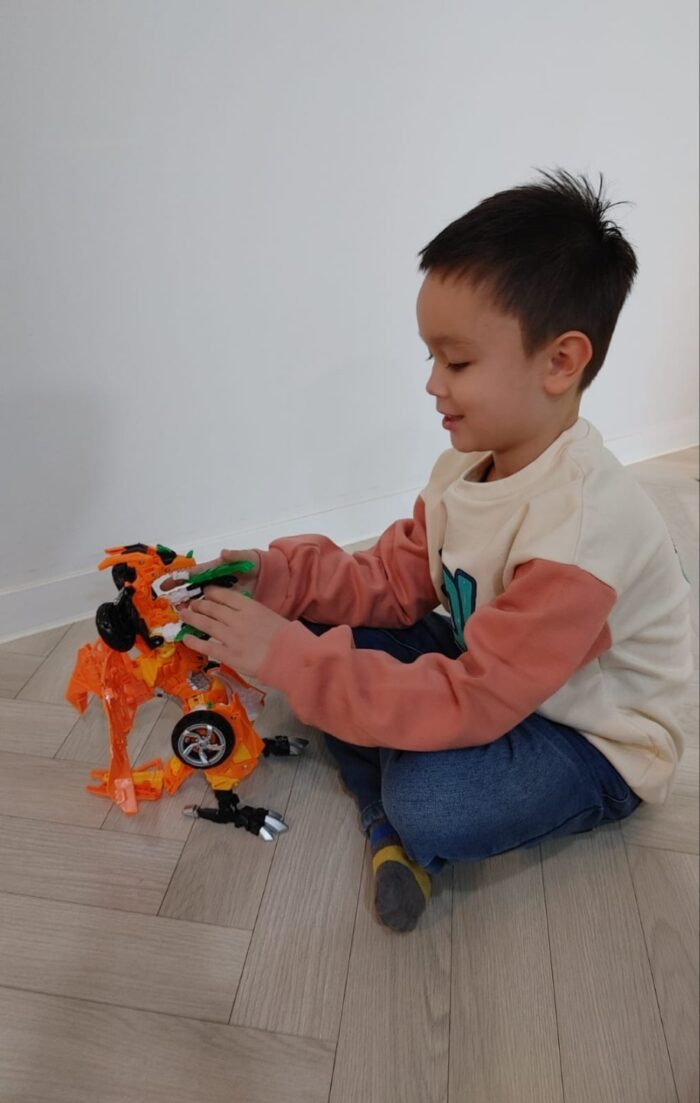
If you’re a dad in 2026, you know the “Screen Time Struggle” is real. But if you’re a dad raising a son in the middle of the neon-soaked, high-speed hustle of South Korea—like I am—the struggle is on another level. Key-in…Low stim…
In Seoul, everything is ppalli-ppalli (fast-fast). From the delivery drivers weaving through traffic to the flashing lights of the Coex Mall, my son is bombarded with sensory input from the moment he steps out of our apartment. By the time we get home, his little nervous system is firing like a Tesla on Ludicrous Mode.
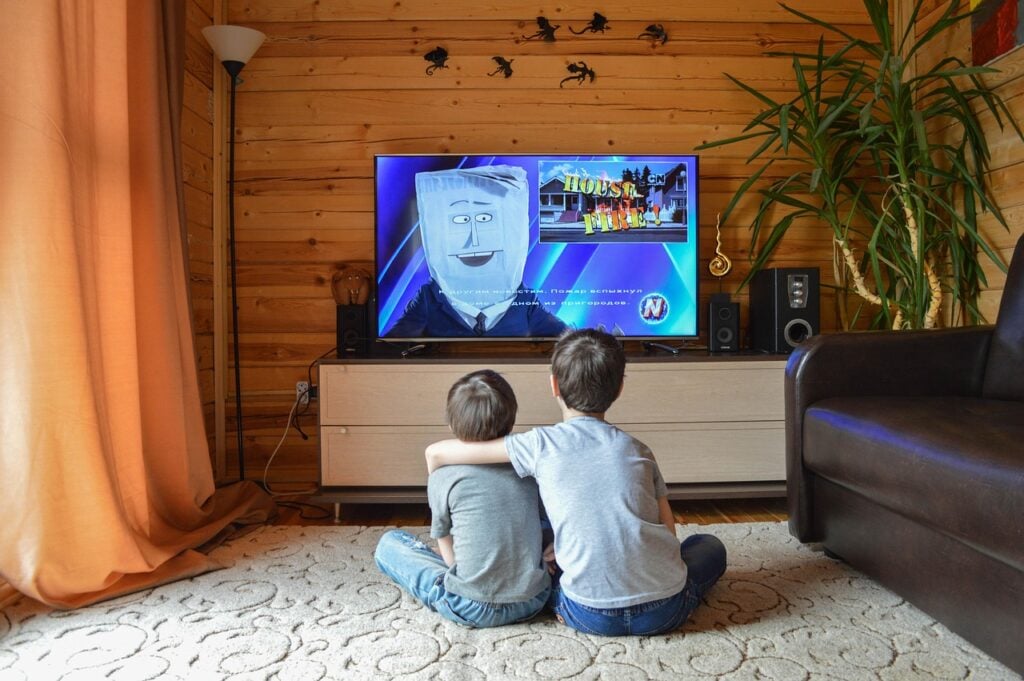
I used to think that putting on a “kids’ show” was giving him a break. I’d grab my Iced Americano, sit him down, and think, “Great, twenty minutes of peace.” I was dead wrong. I started noticing that after certain high-octane cartoons, my son wasn’t relaxed.
He was “wired.” He’d have what I call a “Screen Hangover”—glazed eyes, irritability, and a tantrum that could rival a K-Pop concert’s decibel level the second I turned the TV off.
That’s when I went down the rabbit hole of Low-Stimulation TV. I stopped looking for “distractions” and started looking for “decompression.” Here is my definitive, dad-tested, son-approved list of low-stim shows that actually work.

What is “Low-Stim” and Why Does it Matter for Dads?
Before we get into the list of fun low-stim shows, let’s talk Dad-to-Dad. You’ve probably heard the term “Brain Rot” or seen those TikToks about “Cocomelon Brain.”
As a dad, I want my son to be tough, curious, and resilient. But a toddler’s brain is like wet cement. Most modern shows use fast cuts (changing scenes every 2-3 seconds), neon-saturated colors, and high-pitched, frantic audio.
This triggers a massive dopamine spike. When the show ends, the dopamine drops, and—BOOM—meltdown city.
- Pacing: Scenes last 10–20 seconds, allowing a child to actually process what they see.
- Palette: Muted, natural colors (no “seizure-inducing” neons).
- Audio: Real instruments, soft voices, and ambient nature sounds.
In our house in Korea, “Quiet Time” is now actually quiet. Here is the lineup.
1. Puffin Rock: The “Zen” GOAT
If there were a Hall of Fame for low-stim shows on TV, Puffin Rock would be the first inductee. Narrated by the incredibly soothing Chris O’Dowd, it follows a puffin named Oona and her little brother, Baba.
The Dad Perspective: I love this show because it’s basically an Irish nature documentary for toddlers. In my son’s life, he’s surrounded by concrete and high-rises. Puffin Rock gives him a digital dose of the ocean, mossy rocks, and seagulls.
It hits all the marks for Social-Emotional Learning (SEL). Oona is a fantastic big sister, and the way she handles Baba’s mistakes is a great blueprint for how I want my son to treat others.
My Experience in Korea: When it’s a “Yellow Dust” day and we can’t go to the park, Puffin Rock is our go-to. It lowers the energy in the room instantly.
My son doesn’t stare at it with a slack jaw; he points at the “shrew” or the “owl” and asks questions. It’s active observation, not passive consumption.
2. Trash Truck: The Ultimate “Boy and His Dog” Vibe (But with a Truck)
My son is obsessed with the garbage trucks in our neighborhood. Every Tuesday and Friday, we have to stand on the balcony and wave to the guys in the lime-green vests. So, Trash Truck was a natural fit for these low-stim shows…
The Dad Perspective: Hank is a 6-year-old boy whose best friend is a literal trash truck. It sounds like it could be loud and honky, right? Nope. It’s incredibly gentle. The truck doesn’t speak in a “monster truck” voice; it just makes soft “vroom” sounds and whistles.
This show celebrates Imaginative Play. Hank, Trash Truck, Walter the Bear, and Donny the Raccoon just… hang out. They solve simple problems. There are no villains. No “world-ending” stakes. Just buddies being buddies.
Dad Tip: This is the perfect show to watch if you’re trying to encourage your son to play with his literal trucks afterward. I’ve noticed my son replicates the “gentle truck” behavior with his toys after an episode.

3. Little Bear: The 90s Masterpiece That Still Wins
I’m a 90s kid, so bringing Little Bear back into the rotation felt like a full-circle moment. Everything on TV was kinda considered low-stim shows…
The Dad Perspective: The music is based on Schubert and Mozart. The art style is based on Maurice Sendak’s illustrations. It feels like a living storybook. In 2026, where everything feels “AI-generated” and polished, Little Bear feels handmade.
Why I Use It: In Korea, education is very competitive. Even at the toddler level, there’s pressure to be “doing something productive.” Little Bear reminds my son (and me) that just being a kid—climbing a tree, visiting Grandma, playing in the puddles—is enough.
If you’re looking for “Low-Stimulation TV for 2-year-olds,” this is the top of the list. The dialogue is slow enough for language learners to follow, which is a huge plus for us as we navigate a bilingual household.
4. Tumble Leaf: The “Science Without the Screaming”
Most “educational” shows for kids involve a character shouting “DO YOU SEE THE SQUARE?!” at the screen. Tumble Leaf is different.
The Dad Perspective: It’s stop-motion animation. There is something about the “weight” of stop-motion objects that is more grounding for a toddler’s eyes than flat CGI. Fig the Fox lives in a shipwreck and finds a “special object” every day.
It promotes Scientific Inquiry. Fig doesn’t get the answer immediately. He touches, feels, and tests things. For my son, who is currently in a “Why? Why? Why?” phase, this show is a godsend. It teaches him how to think, not just what to think.
The “Quiet Time” Win: The color palette is gorgeous—lots of blues, greens, and wood tones. It’s visually soothing. Even the “action” scenes are paced like a slow walk in the woods.
5. Stillwater: The Mindfulness Coach We Both Need
If you have Apple TV+, you need Stillwater. It’s about three siblings who have a neighbor who happens to be a giant, wise Panda. One of the great low stim shows for toddlers.
The Dad Perspective: This is probably the “slowest” show on the list. Stillwater tells the kids Zen stories to help them deal with everyday frustrations—like being disappointed or angry at a friend.
Personal Experience: There was a day when my son was really struggling with a toy that kept breaking. He was on the verge of a total Seoul-sized meltdown. We sat down and watched the “Rainy Day” episode of Stillwater. The show didn’t just distract him; it gave him a vocabulary for his frustration.
Dad Vibes: I’ll be honest—I’ve watched this show by myself after he’s gone to bed just to lower my blood pressure. It’s that good.
Family Meditation! A Must Read
How I Structure “Quiet Time” in our Korean Apartment
Living in a city like Seoul means we don’t always have a big backyard to run off steam. Our living room is our playground, our gym, and our cinema. To make these low-stim shows work their magic, I follow a specific “Dad Routine“:
1. The “Pre-Game” Agreement
I never just turn the TV on. I say, “We are going to watch TWO stories of Puffin Rock, then the TV goes to sleep so we can build Legos.” Setting the expectation early prevents the “End of the World” scream when the power button is hit.
2. The Lighting Shift
I usually dim our overhead lights. In Korea, most apartments have those super-bright white LED lights. I turn those off and use a small warm lamp. This signals to my son’s brain that it’s time to “downshift.”
3. No “Auto-Play” (The Dad Commandment)
Streaming services are designed to keep you watching. I disable auto-play. If the next episode starts automatically, the dopamine loop continues. By forcing a stop, I keep control of the environment.
4. The “Connection” Question
When the show ends, I don’t just walk away. I ask my son, “What did Baba find today?” or “Was the Trash Truck helpful?” This moves the experience from a passive “zombie” state to his active memory.
Addressing the “Bluey” Question
Every dad asks: “What about Bluey?” Look, I love Bluey. I think Bandit Heeler is the Dad-God we all strive to be. But is it “Low-Stimulation”?
My Take: No. Bluey is “Medium-Stimulation.” The colors are very bright, the music is high-energy (Joff Bush is a genius, but he’s upbeat!), and the pacing is fast.
I save Bluey for “Active Screen Time”—when we’re watching together and then playing “Keepy Uppy” afterward. For Quiet Time or the hour before bed? I stick to the “Low-Stim 5” listed above.
Final Thoughts
Raising a son in 2026 is a wild ride. We want them to be tech-savvy, but we also want them to have a soul that isn’t fried by high-frequency algorithms.
Choosing low-stimulation TV isn’t about being a “strict” dad or a “no-fun” dad. It’s about being a proactive dad. It’s about protecting my son’s ability to sit in a quiet room and be okay with himself.
Since we made the switch here in Korea, my son is calmer, his play is more imaginative, and—best of all—my “Quiet Time” coffee is actually enjoyed while it’s still hot.
What’s on your dad-approved watchlist? Have you noticed the “Screen Hangover” in your house? Drop a comment below and let’s talk shop.