Okay, confession time: my son is eight, and he still sleeps in my bed. And you know what? I wouldn’t change it for the world. That bedtime snuggle time, the late-night chats, even his little feet kicking me in the ribs—it’s a part of fatherhood I treasure. He was sleeping in a crib for a while…but that did not last…
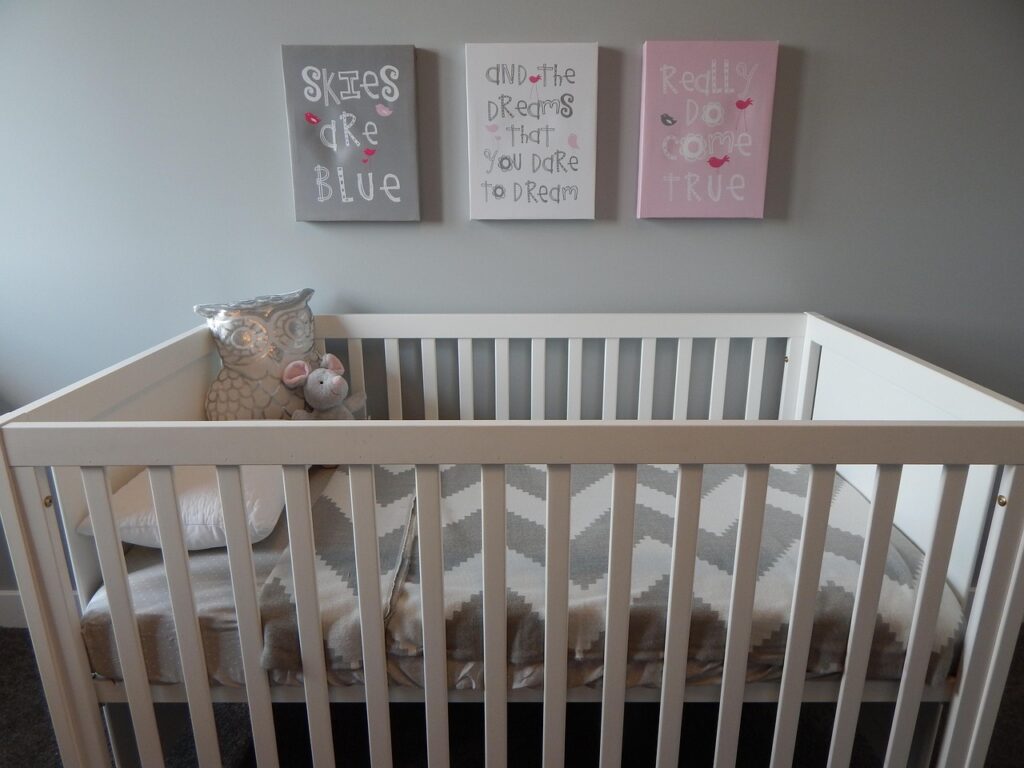
Parenting isn’t one-size-fits-all, and if co-sleeping works for your family, more power to you. But when you have a newborn baby or a tiny toddler, safe sleep practices are a big deal. And for most parents, that means eventually transitioning their baby into a crib.
So, when is the right time to make that big move? Let’s look at what real-world pediatricians recommend, weigh the pros and cons of cribs, and talk about how to make baby sleep safer—because sleepless nights are tough enough without worrying about your little one’s safety.

What the Experts Say About Crib Sleeping
The American Academy of Pediatrics (AAP) is the gold standard for safe sleep advice. According to their guidelines, babies should sleep in the same room as their parents—but not in the same bed—for at least the first six months of life, ideally the entire first year. That means your baby’s crib, portable crib, bedside sleeper, or bassinet should be set up in your room.
Why? The AAP has found that room sharing without bed sharing can reduce the risk of SIDS (sudden infant death syndrome) by up to 50%. That’s a big number. Babies under 12 months are most at risk of sleep-related deaths, so having them close by means you can hear if something’s wrong while still giving them their own safe sleep environment.
Dr. Rachel Moon, a leading SIDS researcher and chair of the AAP Task Force on SIDS, says:
“The safest place for your baby to sleep is in your room, in their own sleep space, for at least the first 6 months. After that, parents can transition to a separate room when they feel ready.”
In other words, there’s no magic month. Many parents move their babies into a crib in their own room somewhere between 6 and 12 months of age, but your comfort level matters too.
Cribs vs. Other Sleep Options
When you’re running on coffee and adrenaline, any flat surface can start looking like a good spot for your baby to nap. (No judgment, we’ve all been there.) But not all sleep surfaces are safe—or practical—long term.
Here’s a breakdown of your main options:
Cribs
Pros:
- Sturdy, long-lasting (can be used until your child is 2–3 years old or hits the crib’s weight limit)
- Meets strict safety standards
- Gives your baby a consistent sleep environment
- Room for breathable sleep sacks, fitted sheets, and white noise setups
Cons:
- Takes up a lot of space
- Some babies resist the transition from a bassinet or bedside sleeper
- Assembly can be a pain
Bassinets and Moses Baskets
Pros:
- Perfect for newborn babies and the early months of life
- Lightweight and portable, so you can keep your baby close during naps
- Easier to place right beside your bed for nighttime feedings
Cons:
- Babies outgrow them quickly, usually by 4–6 months
- Some models aren’t as sturdy as full cribs
Portable Cribs or Playards
Pros:
- Great for travel or small apartments
- Easy to fold up and store
- Doubles as a safe play space during the day
Cons:
- Not as roomy or sturdy as a standard crib
- Mattress might not be as supportive
Bedside Sleepers
Pros:
- Lets you keep your baby literally within arm’s reach
- Ideal for C-section recovery or breastfeeding moms
- Helps parents sleep better knowing their baby is right next to them
Cons:
- Another item your baby will outgrow quickly
- Not a long-term solution beyond 6 months
Co-Sleeping (Parents’ Bed)
Pros:
- Promotes bonding and can make breastfeeding easier
- Less stressful for parents during those sleepless nights
Cons:
- Increases risk of suffocation, falls, and SIDS
- Harder to transition baby to independent sleep later
Co-sleeping is deeply cultural in many parts of the world (I live in Korea, where this is super common), but if you’re in North America, most pediatricians will advise against it.
Safe Sleep Basics: What Every Parent Needs to Know
Regardless of where your baby sleeps, here are the non-negotiables for creating a safe sleep environment:
- Firm, flat mattress: Always use a firm mattress in your baby’s crib or bassinet. Avoid soft surfaces like couches, recliners, or adult beds.
- Fitted sheet only: Crib safety means no extra blankets, bumper pads, pillows, or soft toys.
- Wearable blankets: Use a sleep sack or wearable blanket instead of loose bedding to keep your baby warm.
- No soft objects: Keep stuffed animals, soft toys, and comforters out of your baby’s sleep space during the first year.
- Back to sleep: Always place your baby on their back for nighttime sleep and naps.
- Room sharing: The safest place for your baby to sleep is in your room, not your bed.
- Watch the weight limit: If your baby’s rolling, sitting, or pushing up, it’s time to stop using bassinets or Moses baskets.
These steps aren’t about scaring you; they’re about stacking the odds in your baby’s favor. Even small changes, like removing bumper pads or switching to a fitted sheet, can make a huge difference.
Signs It’s Time for the Crib
Transitioning to a crib is a big change for both parents and babies. Here are some signs your baby might be ready for their new bed:
- They’re outgrowing their bassinet (check height and weight limits).
- They can roll over or push themselves up.
- You want more space in your room or more personal sleep time.
- Your baby’s sleep cycles are becoming more regular, making a consistent bedtime routine easier.
Most families make the move around 6 months, but if you’re not ready yet, that’s okay. Just be sure your current setup is still safe.
Tips to Make the Transition Smooth
- Start with naps: Have your baby nap in the crib during the day so it becomes familiar.
- Create a bedtime routine: Bath, pajamas, storytime, lullaby—whatever works for you. Consistency is key.
- Use white noise: A sound machine can help drown out household noise and mimic the womb’s comforting whoosh.
- Keep the room cozy but safe: A comfortable temperature (68–72°F) and dim lighting can help.
- Don’t rush it: It’s okay if the transition takes time. You’re not failing if your baby still prefers the bassinet for a few weeks.
The Toddler Bed Question
Fast-forward a year or two, and you’ll face another decision: when to move your baby to a toddler bed. Most kids switch between ages 2 and 3, but there’s no rush. If your toddler’s not climbing out of their crib and is sleeping well, keep them there. Cribs are a safe, cozy spot for as long as your child fits comfortably.
So, When’s the Best Time?
If you came here looking for a hard-and-fast rule, I’m sorry, but parenting isn’t that simple. The best time to move your baby into a crib is when they’re physically ready (usually around 6 months), you feel comfortable, and your setup is safe.
The safest place for your baby is in your room but in their own crib or portable crib for at least the first half-year of life.
After that, trust your gut. You know your baby better than anyone. Some families room share for a year, others move their baby into a separate room at 4 months. Both are fine if you follow safe sleep guidelines.
And hey, if you’re like me and your “baby” is now a gangly 8-year-old who still crawls into your bed? That’s okay too. There’s no crib manual for love.