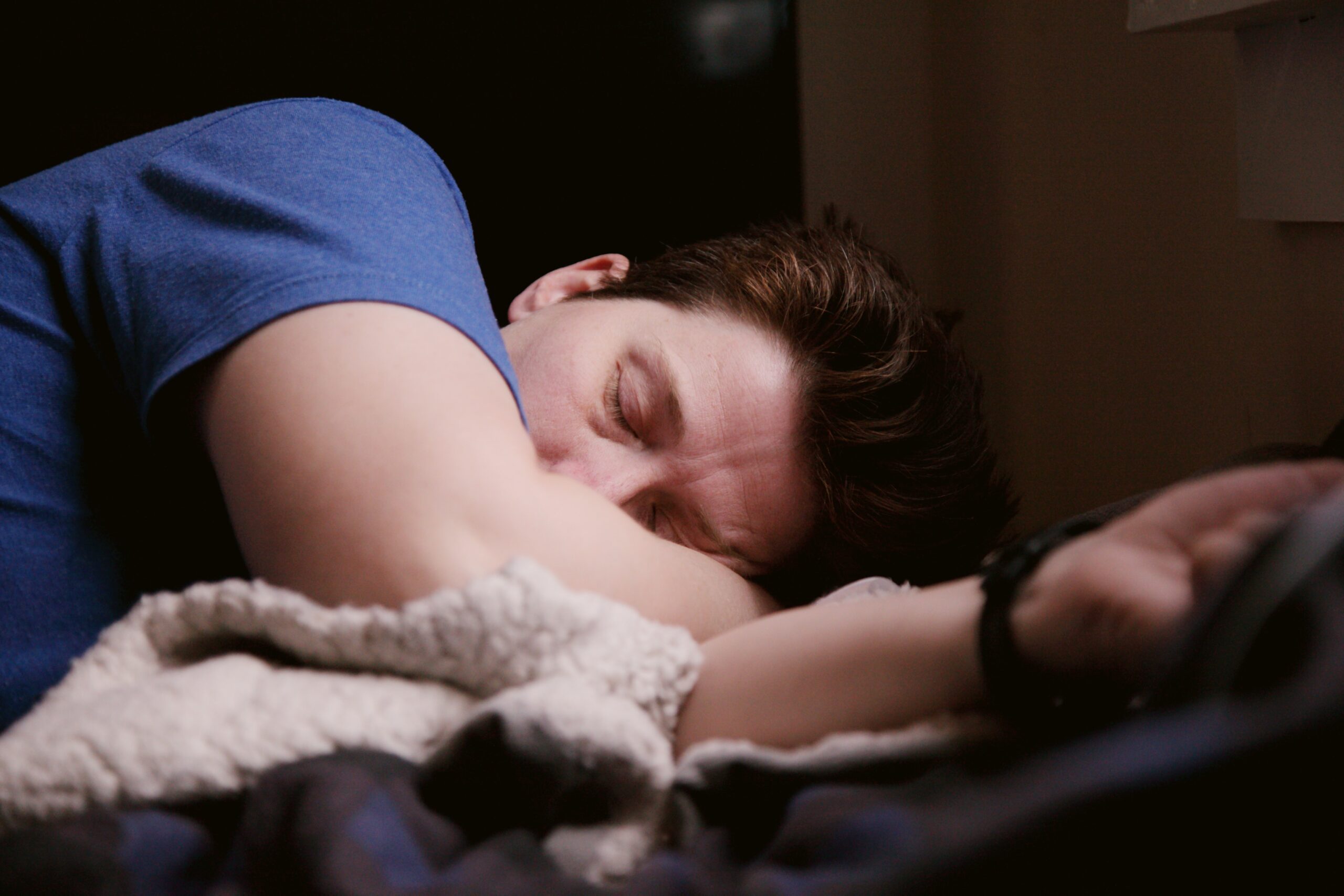
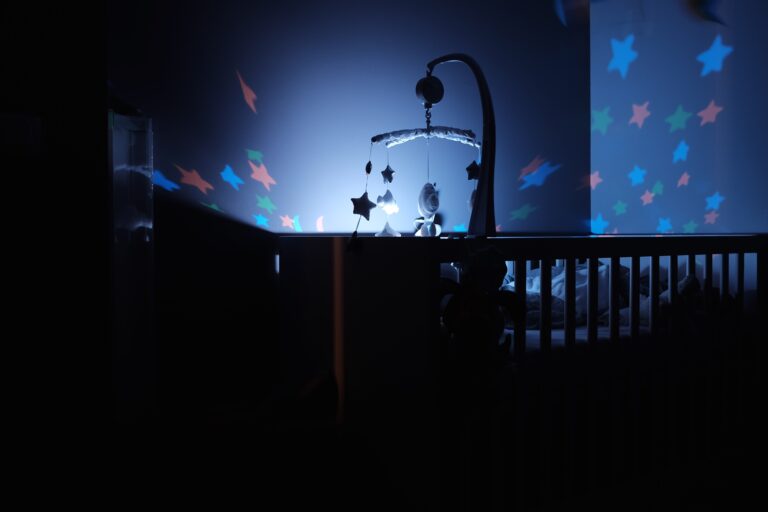
Picture this: It’s 2 AM, and your little one is crying again. You stumble through the dark room, bumping into furniture like you’re navigating an obstacle course. Sound familiar? Many parents wonder if a night light could be the solution to those midnight navigation challenges. But here’s the big question: should babies actually sleep with a night light?
The answer isn’t as simple as flicking a switch. While night lights can make those nighttime diaper changes easier, they might also mess with your baby’s natural sleep patterns. Let’s dive into everything you need to know about night lights and baby sleep.
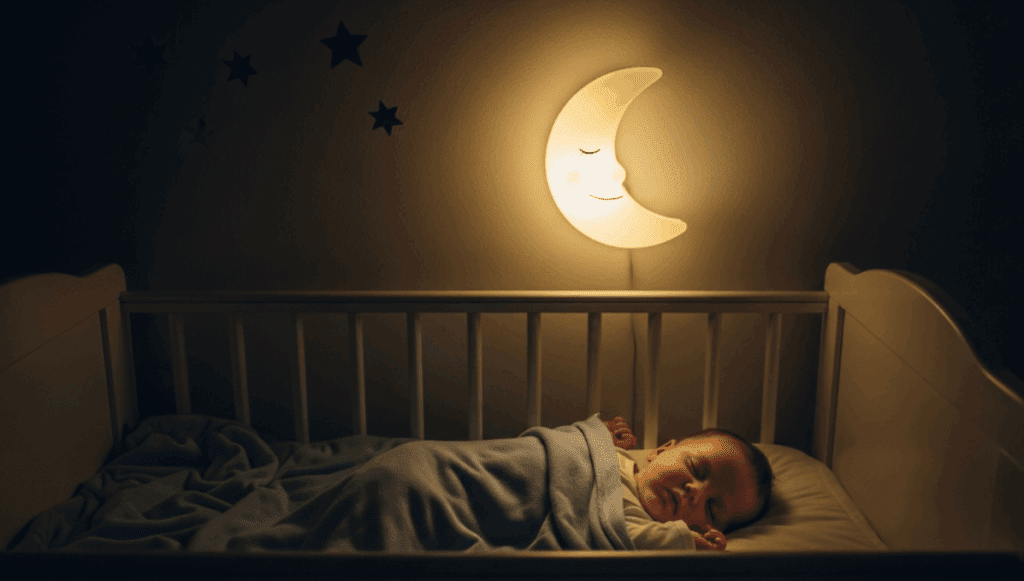
The Science Behind Baby Sleep and Light
How Light Affects Your Baby’s Sleep Quality
Your baby’s sleep isn’t just about being tired – it’s controlled by something called the circadian rhythm. Think of it as your little one’s internal clock that tells their body when it’s time to sleep and when it’s time to wake up.
Light plays a huge role in setting this clock. When light hits your baby’s eyes, it sends signals to their brain that say “Hey, it’s daytime! Time to be awake!” On the flip side, darkness tells the brain to produce melatonin, the hormone that makes us sleepy.
Here’s where things get tricky: even dim light can interfere with melatonin production. Research shows that exposure to light during sleep can reduce the quality of rest, leading to more frequent wake-ups and shorter sleep cycles.
The Blue Light Problem
Not all light is created equal when it comes to sleep disruption. Blue light – the kind that comes from many LED bulbs and electronic devices – is particularly troublesome. This type of light is especially good at suppressing melatonin production, which can seriously mess with your baby’s sleep patterns.
Many modern night lights use LED technology, and if they emit blue light, they could be doing more harm than good. The bright lights from these devices can trick your baby’s brain into thinking it’s morning, even in the middle of the night.
When Night Lights Make Sense
Those Middle-of-the-Night Moments
Let’s be honest – there are times when stumbling around in complete darkness just isn’t practical. Night feedings and diaper changes are much easier when you can actually see what you’re doing. Nobody wants to be that parent who accidentally puts a diaper on backward at 3 AM (we’ve all been there, or at least thought about it).
For these situations, a very dim light can be a lifesaver. The key is choosing the right type and using it correctly.
Age Considerations
Newborns (0-3 months): During the first few months, your baby’s circadian rhythm isn’t fully developed yet. They’re still figuring out the difference between day and night. At this stage, a very dim red light for diaper changes won’t significantly impact their sleep development.
Older Babies (3-12 months): Once your little one hits the 3-month mark, their circadian rhythm starts to mature. This is when light exposure becomes more critical for healthy sleep patterns.
Toddlers and Beyond: As children get older, they might develop a fear of the dark. This is when night lights can actually help with better sleep by reducing anxiety.
The Best Types of Night Lights for Baby’s Room
Red Light: The Sleep-Friendly Option
If you absolutely need some light in your baby’s room, red light is your best bet. Here’s why:
- Red light has the least impact on melatonin production
- It’s easier on the eyes during nighttime wake-ups
- It won’t disrupt your baby’s natural sleep cycles as much as other colors
Warm White vs. Cool White
If red isn’t an option, warm white light is better than cool white or blue light. Warm light has less blue wavelengths, making it less disruptive to sleep patterns.
Avoid These Types:
- Bright white lights
- Cool blue lights
- Lights with multiple colors or patterns
- Motion-activated lights that suddenly brighten
Creating the Perfect Sleep Environment
The Case for Complete Darkness
Many sleep experts recommend keeping your baby’s room as dark as possible. Here’s why total darkness might be the best choice:
- Better Melatonin Production: Darkness encourages natural hormone production for better sleep
- Fewer Night Wakings: Babies tend to wake up less frequently in darker environments
- Longer Sleep Periods: Dark rooms often lead to longer stretches of continuous sleep
- Easier Sleep Associations: Babies learn to associate darkness with sleep time
When it comes to tips to help with your newborn baby boy, creating the right sleep environment from day one can make a huge difference in everyone’s rest quality.
Room Setup for Optimal Sleep
Blackout Solutions:
- Heavy curtains or blackout blinds
- Room darkening shades
- Cardboard or aluminum foil over windows (temporary solution)
- Eye masks for older toddlers (if they’ll keep them on)
Temperature Control:
- Keep the room between 68-70°F (20-21°C)
- Use breathable sleepwear
- Ensure proper ventilation
Noise Management:
- Consider white noise machines
- Minimize sudden sounds
- Keep the room consistently quiet
Practical Solutions for Nighttime Parenting
The Hallway Light Trick
Instead of putting a night light in your baby’s room, try leaving a dim light in the hallway with the door slightly cracked. This gives you just enough light to navigate safely without directly exposing your baby to light while they sleep.
Motion Sensor Lights
Some parents find success with motion sensor lights placed low on the wall or floor. These only activate when you enter the room, providing temporary lighting for necessary tasks without constantly illuminating the space.
Red Light Flashlights
Keep a small red light flashlight near your baby’s room for quick checks and nighttime care. This way, you can see what you need to without filling the entire room with light.
Common Night Light Mistakes Parents Make
Mistake #1: Using Bright, Multi-Color Lights
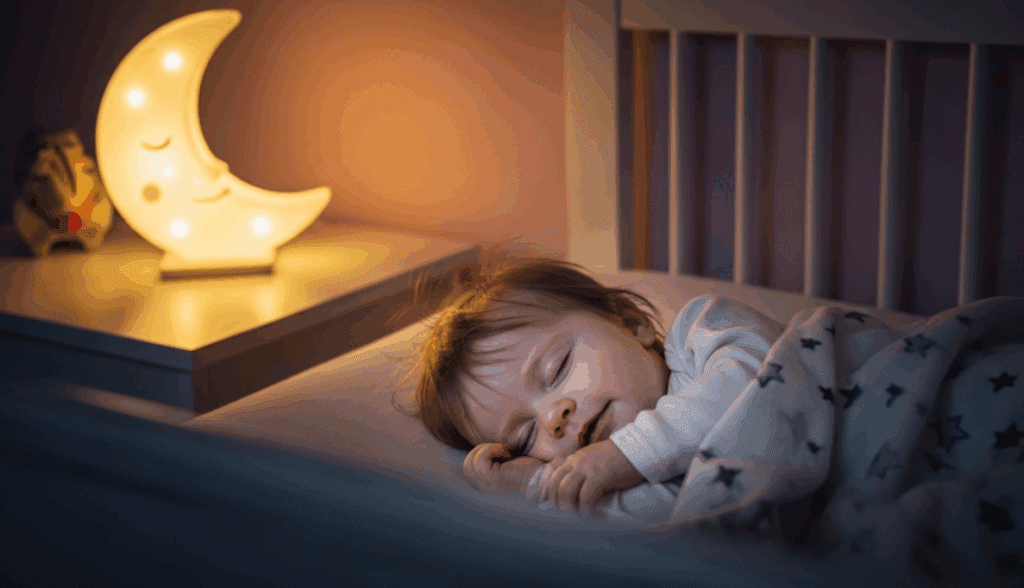
Those cute night lights with stars, moons, and rainbow colors might look adorable, but they can be sleep disruptors. Stick to simple, dim, single-color options.
Mistake #2: Positioning Lights Incorrectly
Placing night lights where they shine directly on your baby’s face or crib can interfere with sleep. Position lights low and away from the sleeping area.
Mistake #3: Using Lights as Entertainment
Some night lights come with music, moving parts, or changing patterns. These features might seem soothing, but they can actually stimulate your baby instead of helping them sleep.
Mistake #4: Not Considering the Child’s Development
What works for a newborn might not work for a 6-month-old. Be ready to adjust your approach as your child grows and their sleep patterns mature.
Signs Your Baby Might Need a Sleep Environment Change
Watch for these indicators that light might be affecting your little one’s sleep:
- Early Morning Wakings: If your baby consistently wakes up very early, light exposure might be the culprit
- Difficulty Falling Back Asleep: Babies who wake up and can’t settle back down might be getting too much light stimulation
- Short Naps: Daytime naps that are consistently too short could indicate light sensitivity
- Increased Night Wakings: More frequent wake-ups during the night might suggest sleep disruption
Understanding your baby’s sleep quality involves paying attention to these patterns and making adjustments accordingly.
Special Situations: When Rules Can Bend
Co-Sleeping Considerations
If you practice co-sleeping with your child, your lighting needs might be different. You may need slightly more ambient light for safety reasons, but the same principles apply – keep it as dim as possible.
Sleep Training and Bedtime Routine
During sleep training, consistency is key. If you decide to use a night light, make it part of the established bedtime routine. However, many sleep experts recommend trying complete darkness first to see if it improves sleep naturally.
Some parents find that incorporating calming activities before bed, like reading short and sweet bedtime poems, works better than relying on night lights for comfort.
Medical Considerations
Some babies have specific medical needs that might require monitoring during sleep. In these cases, very dim lighting might be necessary for safety. Always consult with your pediatrician about the best approach for your situation.
Age-Specific Night Light Guidelines
0-6 Months: The Fourth Trimester Approach
- Use minimal lighting only when absolutely necessary
- Red or very warm light for diaper changes
- Focus on establishing day/night differences
- Avoid continuous lighting in the sleep space
6-12 Months: Developing Sleep Patterns
- Maintain dark sleep environment
- Consider motion-sensor lighting for safety
- Be consistent with light exposure
- Watch for signs of sleep disruption
12+ Months: Toddler Considerations
- Address any emerging fear of the dark
- Use the dimmest effective lighting
- Consider gradual light reduction if transitioning away from night lights
- Maintain consistent bedtime routines
Alternatives to Traditional Night Lights
Glow-in-the-Dark Options
- Wall stickers or ceiling decals that absorb light during the day
- Glow-in-the-dark paint (safe, non-toxic versions)
- Soft toys that glow dimly without electricity
Smart Lighting Solutions
- Programmable lights that automatically dim throughout the night
- Lights that adjust color temperature based on time
- App-controlled systems that gradually reduce brightness
Natural Light Management
- Strategic use of natural moonlight (when appropriate)
- Proper window positioning for optimal darkness
- Seasonal adjustments for changing daylight hours
Creating a Consistent Sleep Schedule
The effectiveness of any lighting choice depends heavily on consistency. Here are key points for establishing healthy sleep patterns:
Daily Routine Elements:
- Same bedtime and wake time every day
- Consistent pre-sleep activities
- Regular meal and nap schedules
- Appropriate daytime light exposure
Environmental Consistency:
- Same room temperature nightly
- Consistent noise levels
- Regular lighting conditions
- Familiar sleep associations
The Bottom Line: What Really Works
After considering all the science and practical aspects, here’s the straightforward answer: most babies sleep best in complete darkness or with minimal, red lighting only when absolutely necessary.
The research strongly supports dark sleep environments for optimal melatonin production and quality rest. However, every family’s situation is unique, and safety should always come first.
Your Action Plan:
- Start with complete darkness and see how your baby responds
- If you need light for safety, choose the dimmest red light possible
- Position lights away from your baby’s direct line of sight
- Be consistent with whatever approach you choose
- Monitor your baby’s sleep patterns and adjust as needed
- Remember that needs change as your child grows
Making the Right Choice for Your Family
The decision about night lights isn’t just about your baby – it’s about your entire family’s sleep quality. Dad duties during those early months can be exhausting, and better sleep for dads is crucial for everyone’s wellbeing.
Consider these external factors when making your decision:
- American Academy of Pediatrics safe sleep guidelines
- Sleep Foundation recommendations for infant sleep
Some dads find that the key to success isn’t just about the lighting, but about preparing for fatherhood in all its challenging and rewarding aspects.
Remember, there’s no one-size-fits-all solution. What works for your neighbor’s baby might not work for yours, and that’s completely normal. The important thing is to stay informed, be flexible, and prioritize safety above all else.
Trust your instincts as a parent, but don’t be afraid to make changes if something isn’t working. Your baby’s sleep patterns will evolve, and your approach might need to evolve too. The goal is finding what helps your little one fall asleep easily, stay asleep longer, and wake up refreshed – even if that means stumbling through the dark a few more times as a parent.
Sweet dreams to you and your little one!